Full measurement set — no shortcuts
Bust, underbust, waist, hip, high hip, shoulder width, front and back torso length, and neckline-to-waist. Vi asks for all of these before cutting fabric on a column.
Vietnam bridal atelier · Ho Chi Minh City
A column gown shows every measurement. Send your references, wedding date, delivery country, and fit concerns. Vi reviews the direction — and the fit risk — before a written quote or deposit is requested.
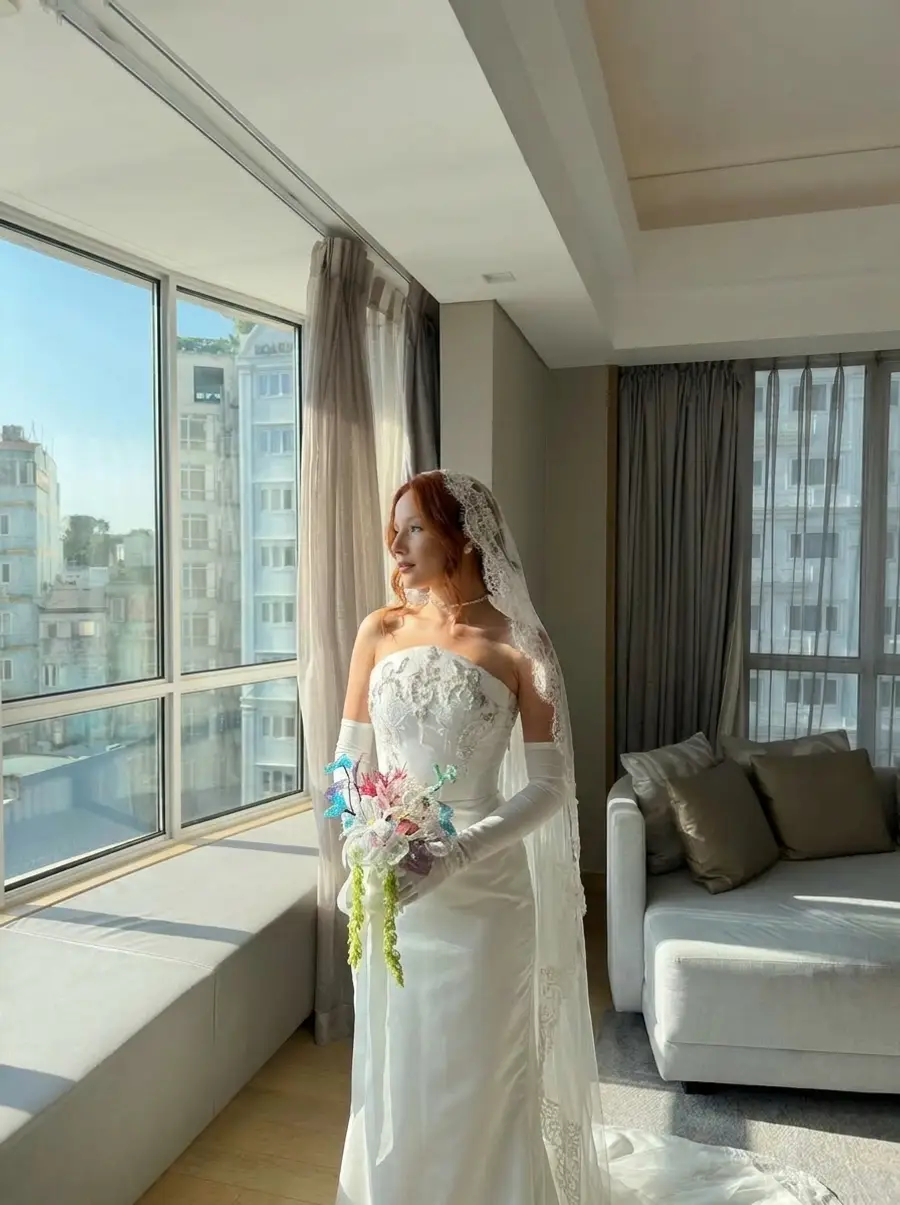
column construction
Vi is honest about this silhouette: a column is the most unforgiving for remote orders.
A column (also called a sheath) follows the body from shoulder to hem with minimal flare. There is no skirt volume to absorb measurement variance. Every number — bust, waist, hip, torso length, shoulder — must be accurate.
Vi does not decline column orders, but she flags the fit risk upfront. She builds extra measurement checkpoints into the review and often recommends a corset back or built-in seam allowance so a local tailor can make small adjustments after delivery.
If your reference is a column and your timeline is short, Vi will say so before deposit.
Before a quote
Vi reviews the construction, measurements, movement, and remote fit risk before payment is discussed.
Bust, underbust, waist, hip, high hip, shoulder width, front and back torso length, and neckline-to-waist. Vi asks for all of these before cutting fabric on a column.
A fitted column can reveal uneven shoulders or posture differences more visibly than other silhouettes. Vi asks about posture concerns early and builds in accommodations where needed.
Crepe, satin, and structured bonded fabrics behave very differently in a column. Crepe drapes and moves. Satin is more rigid. Bonded fabrics hold their shape. Vi confirms which fabric direction matches your reference and comfort needs.
A low back, cowl neck, or draped neckline each affect how the column sits and is structured. These are reviewed as part of the original brief — they cannot be added after production starts.
A column with too little ease is uncomfortable and limits movement at the ceremony and reception. Vi confirms ease requirements before cutting — how much movement the bride needs affects the pattern from the start.
Related cases
Sofia and Mei Lin took close-fit gowns in two directions: crystal embroidery for Sofia, ivory satin and corset structure for Mei Lin.
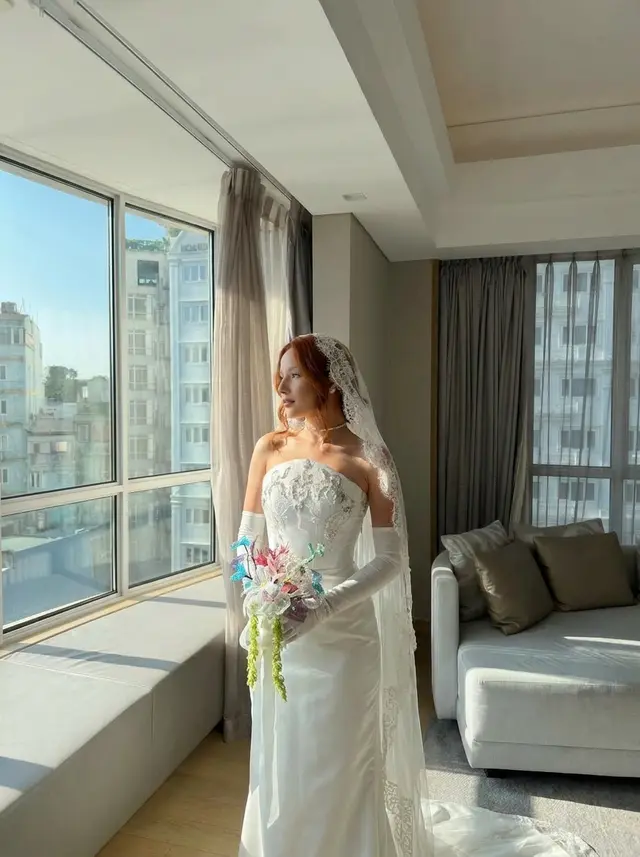
Vietnam · 5 atelier checkpoints · 7 months lead time
Crystal-embroidered column gown in Vietnam, with sketch review, embellishment approval, checkpoints, and atelier QC.
Read the case →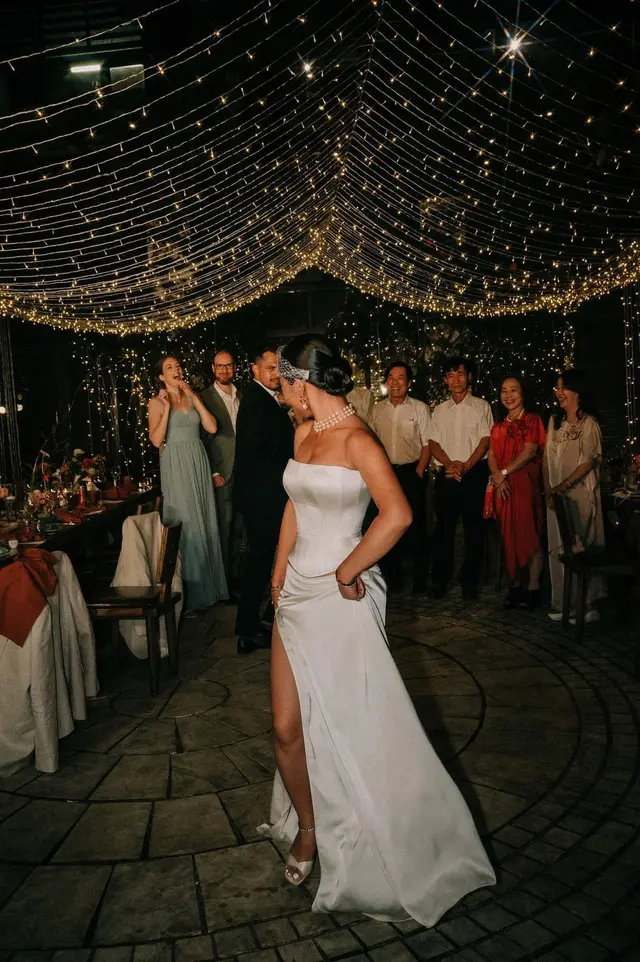
Singapore · 3 remote checkpoints · 4 months lead time
Ivory satin corset gown for Singapore, with remote measurements, progress checkpoints, final QC, and shipping.
Read the case →Remote fit notes
Because columns carry the highest fit risk for remote orders, Vi draws on a set of design features to reduce post-delivery alteration:
Allows waist and upper back fit to be adjusted without a full alteration. Vi recommends this for most remote column orders where the waist measurement has any uncertainty.
Extra seam allowance at the side seams lets a local tailor take in the dress without the risk of running out of fabric. Vi notes where this is built in during QC.
Anchors the gown at the waist and prevents the column from shifting during wear. Often combined with boning in the bodice.
Helps the outer column layer sit cleanly without clinging. Particularly useful for light satin or crepe columns.
Remote ordering
Use the core process pages to plan measurements, production milestones, and final QC around the silhouette risk profile.
Questions
It can be, but it carries more fit risk than an A-line or ballgown. Vi reviews your measurements and brief carefully before confirming direction. She will flag if the timeline or measurement set raises concerns before deposit.
The terms are used interchangeably in bridal. Both describe a close-fitting gown that follows the body from bust to hem. Some designers distinguish them by the degree of flare at the hem — Vi uses whichever term matches your references.
Crepe, satin, and structured bonded fabric are the most common. Crepe is the most forgiving for slight fit variance because it has natural give. Satin is more unforgiving but gives a clean, formal finish. Vi confirms fabric direction from your references before quoting.
Yes. Beading, crystal embroidery, and lace overlays are all manageable on a column. Sofia’s case documents a fully crystal-embroidered column with 7 months lead time and 5 atelier checkpoints for embellishment review.
Vi designs column gowns for remote orders with a local alteration expectation. She notes where seam allowance is built in and can advise on what a local tailor should look for. Small waist, bust, or length adjustments are the most common post-delivery alterations for columns.
Column gowns usually take 8–12 atelier weeks. Heavily embellished column gowns — like crystal or bead work — can take longer. Vi confirms the production timeline during consultation. International brides should plan 4–6 months from first inquiry, especially for embellished designs.
Send your column brief to Vi
No payment is required to start the conversation.